
If you’ve seen the headlines about NDIS updates lately and felt a little unsure about what it all means, you’re not alone.
The Australian Government has announced a significant package of NDIS reforms as part of the 2026 Federal Budget. Here’s what you need to know:
- Some changes are already in motion
- Others will roll out gradually over the next few years
- Most current participants will not see immediate major changes to their day-to-day supports
We’ve gone through the official announcements from the Australian Government Department of Health, Disability and Ageing, so you don’t have to.
What Is Changing in the NDIS in 2026?
The NDIS reforms are being introduced in stages, giving participants, families, and providers time to adjust.
Here’s a plain-language breakdown of the key changes:
NDIS Funding Changes: What’s Being Adjusted
Social and community participation budgets are being reduced.
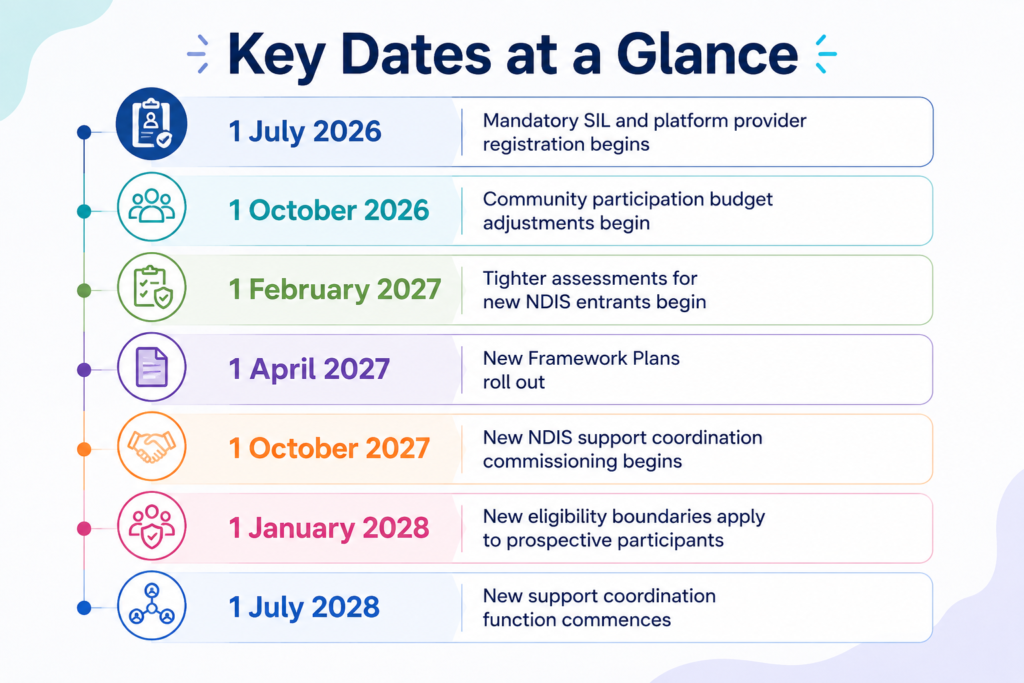
From 1 October 2026, budgets for group activities, supported outings, and community programmes will progressively come down, returning to roughly 2023 levels.
- Average spend in this category reduces from around $31,000 to $26,000 over the next two years
- These are NDIS funding changes to participation budgets, not to core or daily living supports
What is NOT being affected:
- Personal care and daily living supports
- Housing and accommodation supports (SIL, STA, MTA)
- Critical care needs
A new $200 million Inclusive Communities Fund has been announced to help rebuild genuine community participation opportunities in consultation with the disability community.
NDIS Plan Changes: New Rules You Should Know
Mid-plan reassessments are now restricted.
Under the new NDIS plan changes, unscheduled reassessments will only be approved in exceptional circumstances, such as a significant change in your support needs.
- This has already taken effect
- Previously, one in five plans was being reassessed each year
- Unspent funds will no longer roll over to the next plan period
Working closely with your support team to plan and use your NDIS funding changes wisely throughout the year matters more than ever now.
Is NDIS Eligibility Changing?
Yes, but not yet, and not for current participants.
From 1 January 2028, new participants will be assessed using standardised functional assessments rather than diagnosis-based access lists.
- The focus shifts to how a disability affects your daily life, not just your diagnosis
- Existing participants will be transitioned over time
- The government has committed to “nothing about us, without us”, meaning ongoing consultation throughout
NDIS Housing Support, What’s Happening with SIL and STA?
Families are increasingly exploring Supported Independent Living Melbourne and STA respite Melbourne options, and these supports remain protected under the current reforms.
From 1 July 2026, mandatory registration begins for SIL providers Melbourne and platform-based providers.
- This is intended to improve accountability and participant safeguards in supported living arrangements
- Consultation on NDIS housing support and a new commissioned model for 24/7 SIL support begins July 2026
- For anyone currently searching for SIL vacancies Melbourne, working with a registered, person-centred provider is more important than ever
If you’re in Hampton Park, Dandenong, Narre Warren, Cranbourne, Berwick, Pakenham, Clyde, Clyde North, or Frankston, and you’re exploring disability support services Melbourne, now is a good time to have that conversation.
How Do These NDIS Participant Changes Affect You?
If you’re a current participant, your core supports, personal care, daily living, and accommodation are not being cut.
The areas most likely to be affected are:
- Community participation budgets
- The stricter rules around plan reviews
For families and carers across southeast Melbourne, navigating these NDIS participant changes can feel like a lot on top of everything else you’re already managing. The most important thing is that you don’t have to figure it out alone.
What Should You Do If You’re Unsure About Your Supports?
Here are a few simple steps:
- Review your plan. Check which categories your current supports fall under. If you’re unsure, ask your support coordinator or plan manager to walk you through it.
- Talk to your provider early. Don’t wait for your plan review. A good NDIS provider Melbourne should proactively help you understand what these changes mean for your specific plan.
- Check official sources. The most reliable information comes from ndis.gov.au and the Australian Government Department of Health, Disability and Ageing at health.gov.au.
- Ask for NDIS support coordination. If you don’t yet have a support coordinator, now is a great time to get one in place. They can help you navigate reviews, funding questions, and provider changes.
If you’re in Endeavour Hills, Noble Park, Lyndhurst, Officer, Cranbourne East, Cranbourne North, or Frankston, and you need NDIS support services Melbourne, reaching out early gives you more time to plan.
How Quality Support Makes Navigating Change Easier?
Change is always easier when you have the right people beside you.
Good NDIS support means:
- Someone explains what’s changing in plain language, not government speak.
- Your team helps you prepare ahead of reviews.
- Communication stays open during uncertain periods.
- Your plan is being used in a way that genuinely works for you.
NDIS support workers who are consistent, reliable, and actually invested in your wellbeing make a real difference, especially in periods of uncertainty. You shouldn’t have to chase answers or feel left in the dark.
For families in Melton, Melton South, Werribee, Tarneit, Truganina, Wyndham Vale, Harkness, and Bacchus Marsh, families in growing outer suburbs may benefit from exploring their options early. NDIS support services in these areas are expanding as demand grows.
Why Choosing the Right NDIS Provider in Melbourne Matters?
With these NDIS reforms rolling out, who you’re with matters.
Some providers may feel more system-driven, while others focus more on relationship-based support, keeping you informed, checking in regularly, and treating you as an individual.
When looking at disability support services Melbourne, it’s worth asking:
- Do they communicate openly when things change?
- Are they registered with the NDIS Quality and Safeguards Commission?
- Do their NDIS support workers show up consistently and with genuine care?
- Do they help you understand and plan your NDIS funding, not just spend it?
A provider who treats you like family, not a file number, makes the NDIS feel far less overwhelming.
We’re Here to Help You Navigate This
If you or your family are unsure how recent NDIS changes may affect your supports, the team at A-Okay Care is here to help.
We’re a family-led NDIS Registered provider Melbourne, built by siblings with lived experience. We specialise in:
- Supported Independent Living
- Short Term Accommodation
- Medium Term Accommodation
- Specialist Disability Accommodation
- Individualised Living Options
Across southeast Melbourne and beyond.
We’re honest, approachable, and genuinely invested in the people we support. If something’s changing, we’ll make sure you know about it, in plain language, with time to prepare.
Get in touch via our Contact page
→ View our services | → Start a referral
Frequently Asked Questions
Are NDIS plans being cut in 2026?
Not across the board. Community participation budgets are being progressively reduced from 1 October 2026, but personal care, daily living, and accommodation supports are not affected.
Will I lose my NDIS funding?
Most current participants will not see immediate major changes to their supports. Changes are rolling out gradually and the government has committed to consulting the community throughout.
What is changing in the NDIS for eligibility?
New eligibility rules apply to prospective participants from 1 January 2028, shifting from diagnosis-based lists to functional assessments. Current participants will be transitioned over time with proper consultation.
What does mandatory SIL provider registration mean for participants?
From 1 July 2026, all SIL providers Melbourne must be registered with the NDIS Quality and Safeguards Commission. This is intended to improve accountability and quality of care in supported living arrangements.
What is NDIS support coordination, and is it changing?
NDIS support coordination helps participants understand and implement their plans. A new commissioned model for support coordination begins from 1 July 2028. You’ll still have a choice, but within a government-vetted list of providers.
Can unspent NDIS funds still roll over?
No. Under the new NDIS plan changes, unspent funds will not carry forward to your next plan period.
Where can I find the latest official NDIS updates?
The most reliable sources are ndis.gov.au and the Australian Government Department of Health, Disability and Ageing at health.gov.au.